
In the annals of human history, there are dark chapters that reflect our species’ capacity for cruelty and dehumanization. One such chapter is the era of Nazi Germany, where the regime’s eugenics-driven policies led to the systematic killing of millions deemed “unworthy of life.” Today, echoes of that dark past resonate across multiple nations, where euthanasia programs—framed as compassionate choices—have expanded dramatically, raising alarming parallels with historical precedents. From Canada’s Medical Assistance in Dying (MAID) to the permissive regimes in the Netherlands, Belgium, Spain, Colombia, and Luxembourg, these practices often begin with narrow safeguards but evolve into broader applications, targeting vulnerable groups amid concerns of coercion, inadequate oversight, and societal pressure.
A Brief History of Euthanasia Programs Worldwide
Euthanasia, encompassing both physician-assisted suicide (where patients self-administer lethal medication) and active euthanasia (where a doctor administers it), has been legalized in over a dozen countries as of 2025. Pioneered by the Netherlands in 2002, these laws typically start with eligibility limited to terminally ill adults experiencing unbearable suffering. However, expansions have followed in many jurisdictions, often extending to non-terminal conditions, mental illnesses, and even minors.
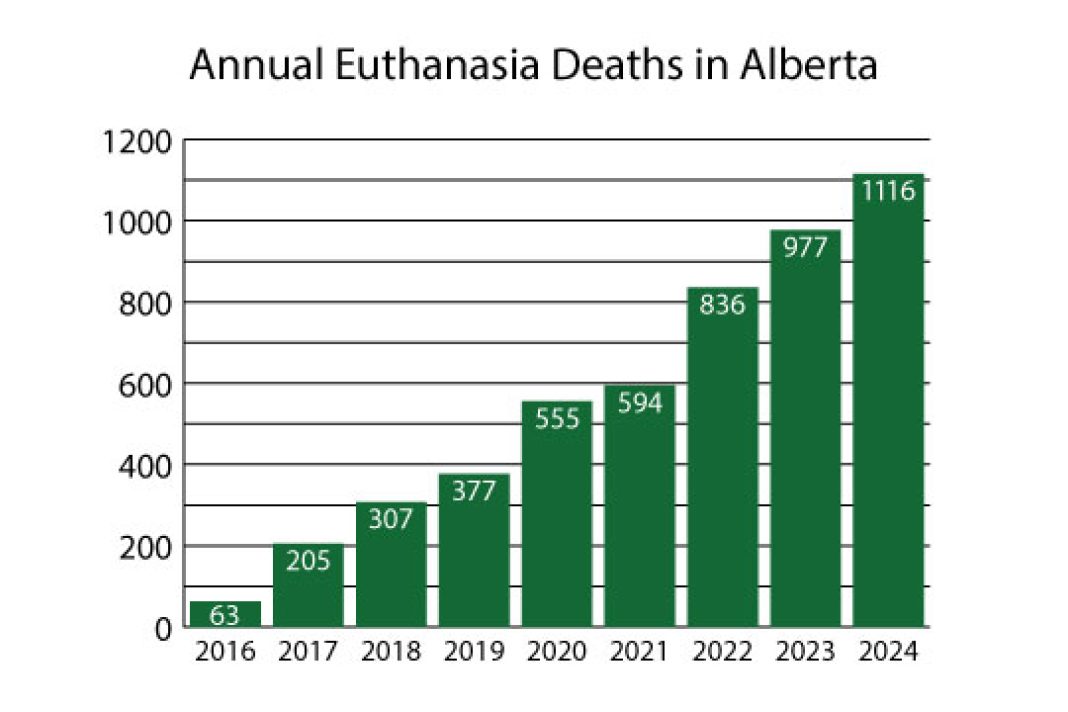
-Canada’s MAID: Legalized in 2016 for those with terminal illnesses, MAID expanded in 2021 via Bill C-7 to include Track 2 eligibility for chronic conditions, disabilities, and non-terminal illnesses where death is not reasonably foreseeable. A planned further expansion to mental illness as the sole condition was delayed until March 17, 2027, amid concerns over readiness and ethical risks. In 2023, MAID accounted for 1 in 20 deaths nationwide, with Quebec leading per capita. Critics highlight a surge in cases among the disabled and poor, with reports of coercion due to inadequate palliative care.
-Netherlands: The first nation to legalize both euthanasia and assisted suicide in 2002, criteria include unbearable suffering without a terminal requirement. Expansions now cover psychiatric disorders, dementia (via advance directives), and minors from age 12 with parental consent. Cases rose from 1,882 in 2002 to over 8,000 in 2022, representing 5% of deaths, with duo-euthanasia (couples dying together) also permitted.
– Belgium: Legalized in 2002 for unbearable physical or mental suffering, extended to emancipated minors in 2014 regardless of age (with parental consent for under-18s). By 2023, cases reached 2,966 (2.4% of deaths), including psychiatric cases (1.4% of total), with reports of euthanasia for non-terminal conditions like depression.
– Spain: Legalized in 2021 for adults with serious, incurable illnesses or chronic, debilitating conditions causing unbearable suffering. Over 600 cases occurred in the first two years, with expansions debated for mental health. The law requires two doctors’ approval and a one-month waiting period.
– Colombia: Decriminalized in 1997 by Constitutional Court ruling for terminal patients; expanded in 2021 to non-terminal illnesses and 2022 to severe disabilities. The first non-terminal case was in 2022 for chronic obstructive pulmonary disease. By 2025, over 1,000 cases annually, with court oversight but concerns over access inequities in a resource-strapped system.
-Luxembourg: Legalized in 2009, mirroring Belgium’s criteria for unbearable suffering. Cases are low (around 20 annually, 1% of deaths), but include psychiatric conditions. A panel of three doctors must approve, emphasizing strict oversight.
Other nations like Portugal (legalized 2023, implementation pending regulation for terminal suffering), Ecuador (2024 for irreversible injuries), and New Zealand (2021 for terminal illnesses expected within six months) show similar patterns of initial restriction followed by debates on broadening access. In all, these programs illustrate a “slippery slope,” where safeguards erode over time.
The Nazi Euthanasia Program: A Dark Precedent
The Nazi regime’s “Aktion T4” program (1939–1941) targeted the disabled, mentally ill, and chronically ill under the banner of “mercy killings” for those with “life unworthy of life.” Starting with voluntary cases, it devolved into involuntary mass murder, claiming 300,000 lives by war’s end. This eugenics-fueled atrocity normalized state-sanctioned death for the vulnerable, a cautionary tale for modern expansions.
Parallels Between Global Euthanasia Practices and Nazi Euthanasia
Despite safeguards, contemporary programs echo Aktion T4’s trajectory:
1. Expanding Criteria: Like T4’s shift from terminal to any “unworthy” condition, programs worldwide have broadened—from terminal illnesses (e.g., Canada’s initial 2016 law) to chronic pain, disabilities, and mental health (Netherlands, Belgium, Spain, Colombia). In Belgium and the Netherlands, psychiatric cases now comprise 1–5% of euthanasia.
2. Voluntary to Coerced: Initial voluntariness gives way to pressure, as seen in Canada’s MAID cases where poverty or waitlists for care allegedly push choices (e.g., veterans offered MAID over housing). In the Netherlands, 2023 saw advance directives for dementia, blurring consent lines.
3. Lack of Oversight: Reporting is mandatory but enforcement varies. Belgium’s federal commission reviews cases, yet non-reporting persists (up to 50% in early years). Colombia’s court system struggles with volume, leading to delays and inconsistencies.
4. The Role of Doctors: Physicians, sworn to “do no harm,” now administer death, raising ethical dilemmas. In Spain and Luxembourg, two-doctor approvals aim to mitigate, but normalization in training (as pushed in Canada) erodes resistance.
Eugenics and the Global Euthanasia Expansion
Eugenics, which inspired T4, lingers in modern debates. Disability advocates in Canada (e.g., Council of Canadians with Disabilities) and Belgium argue expansions devalue “low-quality” lives, echoing eugenic ideals. In Colombia, access disparities disproportionately affect indigenous and low-income groups, raising equity concerns. A 2025 Canadian study warned of trillions in healthcare “savings” from aggressive MAID use, framing it as economic eugenics.
The Johnson Family: A Cautionary Tale from Canada
The 2018 case of Audrey Parker, approved for MAID due to chronic pain and breast cancer (not terminal), underscores coercion risks. Her family claimed inadequate alternatives were offered, with daughter Laura stating, “She was not given any other options, and she was not given any hope.” Similar stories emerge globally: a Dutch dementia patient euthanized against recent wishes (2016) and Belgian twins choosing death over blindness (2013).
Normalization in Medical Education and Systems
Canada’s push to integrate MAID training in curricula normalizes ending life, a trend seen in Dutch and Belgian schools. In resource-poor Colombia, overburdened systems may accelerate approvals, while Spain’s 2021 law integrates euthanasia into public health, potentially pressuring vulnerable patients.
The Need for Vigilance and Action
The parallels between these global programs and Nazi euthanasia are undeniable, with expansions risking abuse despite claims of safeguards. Citizens worldwide must act:
1. Educate Yourself and Others: Study histories of T4, eugenics, and current data from the Netherlands (5% of deaths) or Belgium (2.4%).
2. Advocate for Stronger Oversight: Demand independent panels, as in Luxembourg, and full reporting to counter under-detection in Belgium.
3. Support Alternatives: Push for enhanced palliative and mental health care, addressing Canada’s waitlist crises or Colombia’s inequities.
4. Oppose Normalization in Education: Protest euthanasia training mandates, as in Canada, to preserve medicine’s healing ethos.
5. Engage Politically: In pending expansions (e.g., Portugal’s regulation, Canada’s 2027 mental health inclusion), vote and lobby for life-affirming policies.
In conclusion, the worldwide resurgence of euthanasia—from Canada’s MAID surge to expansions in Europe and Latin America—threatens the sanctity of life through coercion, abuse, and eroded safeguards. By heeding history’s warnings and demanding robust protections, we can avert another tragic chapter. Vigilance is not optional; it is our moral imperative.


I look forward to a more robust conversation with JeanRoch about MAID. I have reached out to him and I hope to hear more of his perspective. Although I disagree with the program for many reasons, I do see the benefit and solace that it can bring to many families. We have all seen friends and family members suffering and would not propose to inject my feelings into someone else’s end of life experience.
Unlike Bruce Scholl, I was not instructed by God to become a provider of MAID. Being an atheist but humanist doctor, I found it pointless after a 55-year-old medical career, to see patients pointlessly suffer intolerably with a grievous and irremediable condition that could not be cured or improved. The dozens of patients I have provided with this relief of their misery were all very grateful. The great majority of them were actually quite educated and not from the lower rungs of society. They were all aware of the alternatives and came to their decision on their own without coercion. There is many innuendos and use of selective cases that are worrisome in this article. The trial to equate it with nazi Germany is just awful. It does insult to the moto of big media : intelligence, logic, respect. Is there an editorial review of articles published here ?