(Al Jazeera Media Network) Japan’s plans to deploy missiles on its westernmost island, close to Taiwan, within five years will add to the growing tensions with China, analysts say.
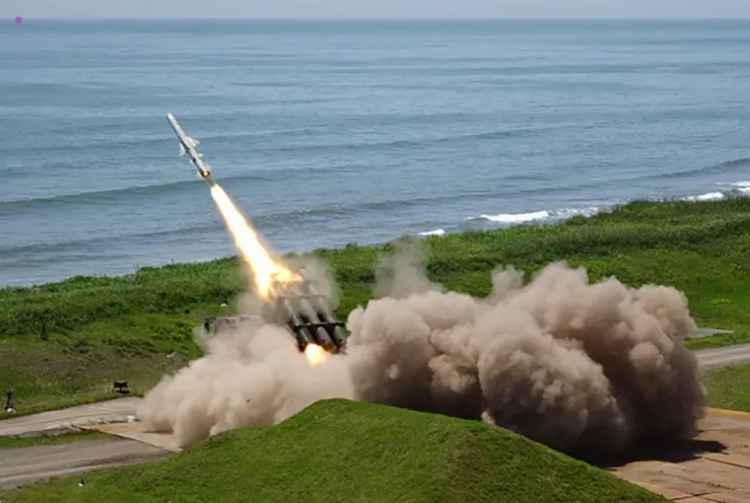
Japanese defence minister Shinjiro Koizumi said the surface-to-air systems – designed to intercept aircraft and ballistic missiles – will be deployed to Yonaguni island, located about 110 km east of Taiwan, which is claimed by China as its sovereign territory, by March 2031.
“It depends on the progress of preparing facilities, but we are planning for fiscal 2030,” Koizumi told reporters on Tuesday, providing the clearest timetable so far.
Analysts say the move signals a deliberate hardening of Japan’s posture.
Japan’s decision represents a “calculated escalation that will increase regional tensions,” said Einar Tangen, senior fellow on geopolitics at the Centre for International Governance Innovation (CIGI).
“These actions are not occurring in a vacuum,” Tangen told Al Jazeera. “[The] actions are timed to strengthen Prime Minister Sanae Takaichi’s hand ahead of a visit to Washington, scheduled for March 19, 2026.”
Yonaguni sits at the southwestern edge of Japan’s territory, close enough to Taiwan to see its coastline on a clear day.
The island forms part of the Ryukyu chain, a string of more than 55 islands stretching toward Japan’s main islands. Over recent years, Tokyo has expanded military infrastructure across the archipelago, installing radar systems, ammunition depots and missile batteries.
While Japan first announced plans in 2022 to enhance Yonaguni’s defences, this marks the first time officials have committed to a specific deployment deadline.
Relations between Tokyo and Beijing have remained strained since Takaichi publicly raised the possibility of military involvement in a Taiwan contingency during parliamentary remarks last November.
Her comments marked a noticeable departure from Japan’s longstanding ambiguity over Taiwan. They also came shortly after the 80th anniversary of the end of Japan’s colonial rule over Taiwan, adding historical sensitivity for Beijing.
Beijing, which considers Taiwan part of its territory, condemned the remarks as provocative.
“Japan must fully repent for its war crimes, immediately stop its wrong and provocative statements and moves that interfere in China’s internal affairs, and stop playing with fire on the Taiwan question,” China’s Foreign Ministry said.
China subsequently discouraged travel to Japan. Chinese visitors contribute roughly $11 billion annually to Japan’s economy.
Beijing has also increased military and economic pressure, dispatching naval vessels near Japanese waters, tightening controls on rare earth exports and scaling back cultural exchanges, including withdrawing giant pandas from Tokyo’s Ueno Zoo, a symbol for China of friendship between the two sides. China dominates the production of rare earths used in the manufacturing of electric cars, phones and other high-tech devices.