
The phrase “bread and circuses” comes from the Roman poet and satirist Juvenal, writing around 100 AD in his Satires. He observed that the Roman population — a people who had once wielded genuine political power — had grown complacent, easily pacified by two simple things: food (panem) and entertainment (circenses, referring to the chariot races at the Circus Maximus). Juvenal’s critique was sharp and pointed, but notably, his contempt wasn’t directed at the rulers who provided these distractions. It was aimed squarely at the Roman people themselves, for abandoning their civic responsibilities in exchange for comfort and spectacle.
Nothing much has changed.
For a long time, I counted myself among the distracted. Politics felt distant, irrelevant, someone else’s problem. There were always more entertaining things to pay attention to. It wasn’t until I began looking more closely at what was actually being planned — behind the noise, behind the colour and the pageantry — that I understood what was really going on. The distractions aren’t accidental. They are deliberate. And they are everywhere.
Consider the pattern: politicians photographed at the Calgary Expo, at Carifest, at Pride Night events hosted by police services. These aren’t inherently bad things. But ask yourself who benefits from the optics, and why these moments are so carefully curated and amplified. The message being sent, whether consciously or not, is: look here, not there. Costumes, dancing, food, and celebration — and while your attention is held, the people planning the world continue their work, largely unobserved and unquestioned.
It’s not a new strategy. It’s arguably the oldest one in the book.
The Hunger Games captured this dynamic with surprising clarity — and it’s worth noting that the dystopian nation at the centre of that story is called Panem. Latin for bread. The wealthy Capitol residents live in excess and ease, while the districts toil, suffer, and are ultimately expendable. The rulers don’t just ignore the gap — they perform indifference. They throw it in your face, because they believe, with some justification, that most people simply won’t notice. Or won’t care.
That belief is what should disturb us most.
It was around this time that news broke of another assassination attempt on President Trump — this one at the White House Correspondents’ Dinner. Whatever your political views, anyone paying attention has to ask the same question: what is happening right now that we’re not supposed to be watching? High-profile, chaotic events have a long history of providing cover. While the cameras cluster around one story, decisions get made, legislation gets passed, and rights quietly disappear.
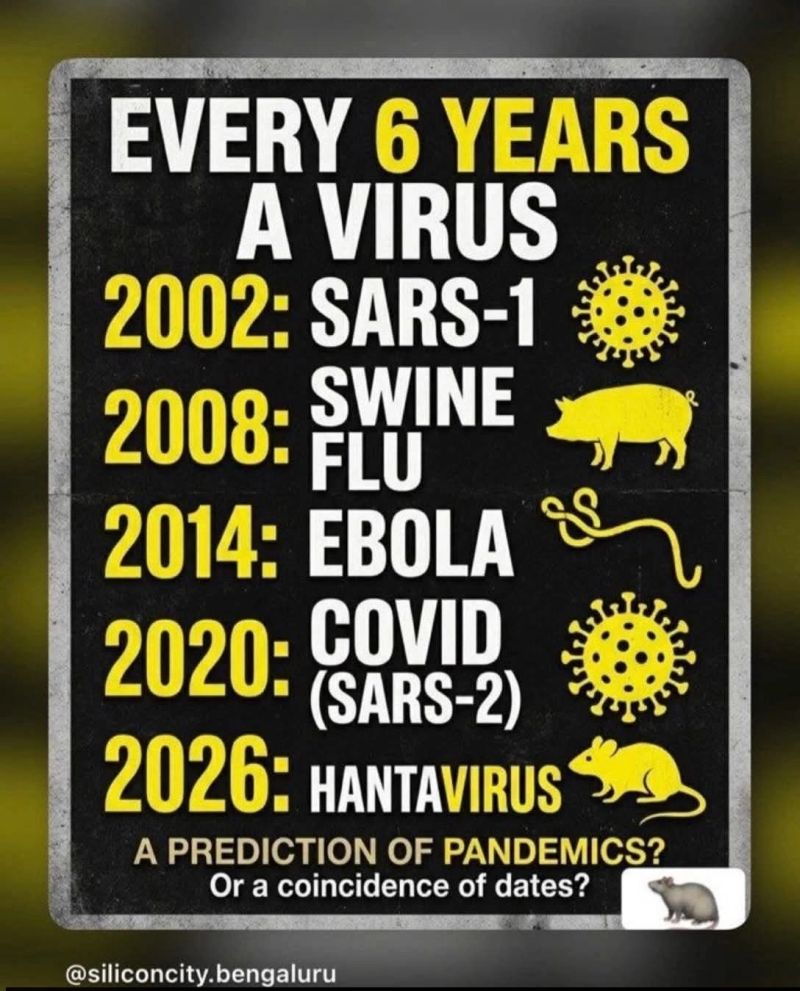
We saw this dynamic play out clearly in 2020. Now, while the world is gripped by fear — hazmat suits on cruise ships, rolling lockdowns, relentless media coverage. And in Canada, they have been moving ever since. Not with one sweeping declaration, but with a long, patient series of bills — each one modest-sounding in isolation, each one a little more intrusive than the last.
Look at the record. Bills C-2 and C-8 opened the door to warrantless surveillance and data seizure with unchecked ministerial power. Bill C-27 expanded that reach further. Bill C-4, sold as compassion, stripped parents of the right to help their own children navigate confusion about their bodies. Bill C-16 dismantled sex-based protections for women that were once guaranteed under the Charter. Bill C-5 put violent offenders back on the street through automatic bail provisions, while Bill C-75 made the courts increasingly reluctant to hold anyone accountable at all — with the Jordan principle now routinely used to have serious charges dismissed on the basis of delay.
Then there is the systematic assault on speech and information. Bill C-9 introduced hate speech provisions without ever defining what “hate” means — a deliberate vagueness that is the hallmark of thought policing. Bill C-10 and Bill C-11 handed government bureaucrats authority over internet content and streaming platforms. Bill C-18 extended that reach to online news. Bill C-36 and Bill C-63 — the latter dressed up as a child safety bill — pushed further into the territory of controlled, monitored, government-approved expression. Bill C-65 introduced sweeping amendments to the Elections Act, touching the very machinery of democratic participation.
And then the economy. Bill C-48 banned oil tankers from the northern BC coast, effectively killing the Northern Gateway Pipeline. Bill C-69 — the so-called “no more pipelines act” — made it functionally impossible to build major energy infrastructure. Bill C-59 took aim at oil and gas more broadly, and Bill C-372 went after fossil fuel advertising itself, criminalizing the promotion of an industry that employs hundreds of thousands of Canadians.
Underneath all of this runs a quieter current of financial and structural transformation. Bill C-223 lays groundwork for Universal Basic Income — a policy that, whatever its merits, creates permanent dependency on government. Bill S-275 proposes reforms to the Bank of Canada. Bill S-210 advances digital identification. And Bill C-293 raises questions about Canadian sovereignty itself.
None of these bills made front page news for long. Most Canadians couldn’t name half of them. And that, of course, is the point.
Now Bill C-22 is before Parliament, and the pattern continues. Meta testified before the Standing Committee on Public Safety warning that Part 2 of the bill could “significantly harm Canadians’ privacy and cybersecurity — including potentially requiring companies to build capabilities that break or weaken encryption, or forcing providers to install government spyware on their systems.” This is not a fringe concern. It is a documented, credible warning from one of the world’s largest technology companies — and it received a fraction of the attention it deserved.
That is not an accident.
Summary
“Bread and circuses” is more than a historical curiosity — it is a timeless description of how power maintains and expands itself. Juvenal identified it in ancient Rome: keep the population fed and entertained, and they will surrender their political awareness without a fight. Today, the formula has been updated, but the logic is identical. Carefully staged public events, endless cultural spectacle, and manufactured media crises hold public attention while consequential decisions are made out of view.
In Canada, those decisions have accumulated into something substantial. Taken one at a time, each bill can be explained away, defended, reframed. Taken together — surveillance powers, speech restrictions, censorship of the internet and news, the dismantling of the energy sector, erosion of parental rights, weakened criminal accountability, and now potential government access to encrypted communications — they form a picture worth looking at clearly.
The lesson of Juvenal’s Rome is simple: the moment a population stops paying attention is the moment it loses the ability to protect itself. The circus is always open. The question is whether you are in the stands, or watching who is running the show.