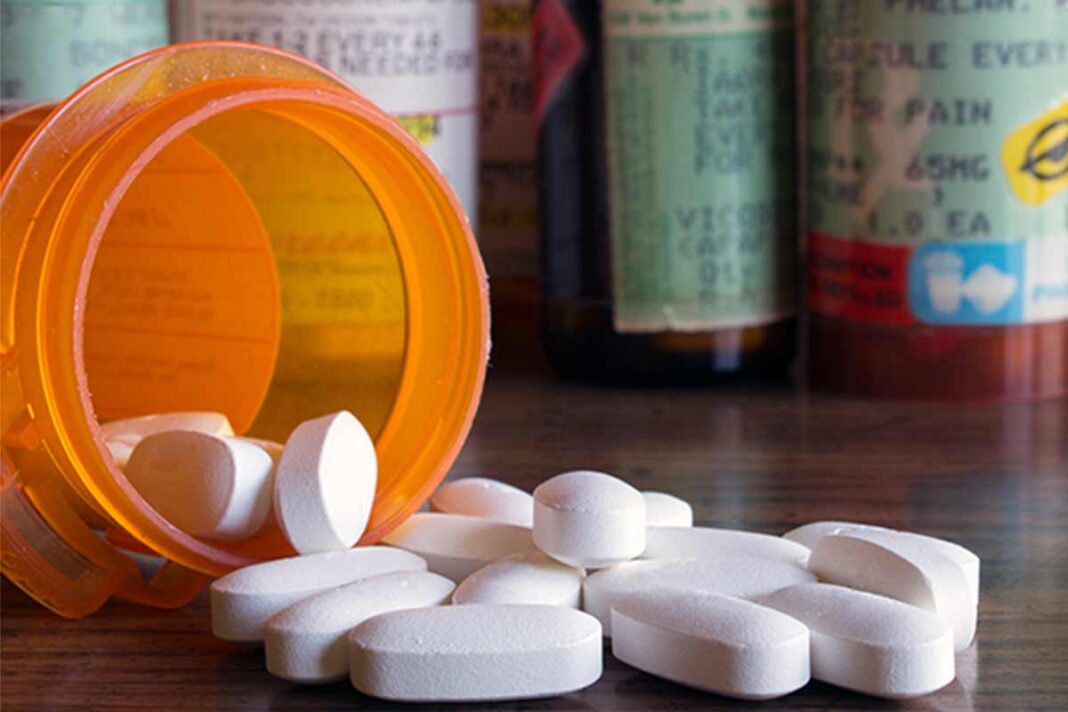
(University of Southern California) In a study published today (Nov. 30) by Nature, scientists from the University of Southern California, Washington University in St. Louis, and Stanford University have demonstrated that by chemically linking fentanyl to the sodium pockets that exist within nerve cell receptors, they could block the drug’s harmful side effects and still reduce pain.
Further study is needed, but the results hold promise – not just for drug development but for addressing the nation’s crisis of addiction and overdose. Nearly 70,000 U.S. residents died in 2020 of an opioid overdose – most from the synthetic opioid fentanyl, according to the National Institute on Drug Abuse. In the 1990s, the Food and Drug Administration approved the use of fentanyl to ease severe pain in cancer patients, but it has since made its way into the streets, worsening the national crisis of opioid abuse.
“In its current form, fentanyl is like a weapon of mass destruction,” said Vsevolod Katritch, a computational scientist at the Bridge Institute at USC Michelson Center for Convergent Bioscience, and a corresponding author of the study. “Our new collaborative work suggests that we could redesign the drug in such a way that we convert this frequent overdose killer to a much more benign but still effective analgesic.”
Drugs of all kinds are designed to target certain receptors on nerve cells known as GCPRs, or G-coupled protein receptors, which act as signal transmitters. These receptors are like switches that mediate a drug’s intended effect on the brain and body, but also the unintended side effects. In the case of fentanyl, the most potent painkiller of all opioids, patients may suffer addiction and may die from respiratory arrest.
Katritch noted that he and fellow scientists Ray Stevens and Vadim Cherezov at the Bridge Institute and the USC Dornsife College of Letters, Arts and Sciences have been looking at the potential of the sodium mechanism since they first identified it within adenosine and opioid receptors about a decade ago.
Katritch and his collaborators said that although further study is needed to prove that their less harmful version of fentanyl will work in humans, the results have opened a new door for scientists to potentially improve the safety of painkillers.
“We are desperately looking for ways to maintain the analgesic effects of opioids, while avoiding dangerous side effects such as addiction and respiratory distress that too often lead to death,” said corresponding author Susruta Majumdar of Washington University in St. Louis. “Our research is still in its early stages, but we’re excited about its potential for leading to safer pain-relieving drugs.”
Beyond opioid receptors, noted Katritch, this work opens a new molecular design concept for dozens of GPCRs where such functional conversion in existing drugs would be desirable.
https://medicalxpress.com/news/2022-11-safer-opioid-scientists.html