In an era of economic volatility, geopolitical tensions, and shifting monetary policies, gold and silver continue to shine as cornerstone investments. These precious metals have long served as safe havens, stores of value, and hedges against inflation. As we step into 2026, market analysts are optimistic about their trajectories, with gold expected to solidify its role as a portfolio stabilizer and silver potentially delivering outsized gains. This article explores the current landscape, historical context, and forward-looking insights, drawing on recent expert analyses—including a notable forecast from Bank of America’s Michael Widmer, who predicts gold as the primary hedge and performance driver this year, with silver possibly topping out between $135 and $309 per ounce.
A Brief Historical Perspective
Gold and silver have been integral to human civilization for millennia. Gold, often dubbed the “king of metals,” was used in ancient Egypt for jewelry and currency as early as 3000 BCE. Silver, with its antimicrobial properties and conductivity, played a pivotal role in photography, electronics, and coinage throughout history. The gold standard, which tied currencies to gold reserves, dominated global finance until the mid-20th century, underscoring their enduring appeal.
In modern times, these metals have evolved into financial instruments. The 1970s oil crisis and inflation spikes saw gold prices skyrocket from $35 to over $800 per ounce. Silver hit a peak of nearly $50 in 1980 during the Hunt brothers’ infamous market cornering attempt. More recently, the 2008 financial crisis and the COVID-19 pandemic reinforced their safe-haven status, with gold surpassing $2,000 in 2020 and continuing its upward march.
The Stellar Performance of 2025
2025 was a banner year for precious metals, fueled by persistent inflation, central bank diversification, and industrial demand. Gold prices surged approximately 66%, marking its best annual gain since 1979, while silver exploded by 142%. This rally was driven by factors such as U.S. Federal Reserve rate cuts, escalating geopolitical risks (including conflicts in the Middle East and trade tensions), and a weakening dollar. Retail and institutional investors poured into gold-backed ETFs, with inflows reaching levels not seen since 2020.
Silver, often called “gold’s poorer cousin,” benefited from its dual role as both a monetary asset and an industrial commodity. Demand from solar panels, electric vehicles, and electronics sectors skyrocketed, tightening supply amid mine output constraints.
Current Market Snapshot (As of January 6, 2026)
As of today, gold is trading around $4,507 per troy ounce, reflecting a modest uptick from recent sessions amid ongoing safe-haven buying. Silver stands at approximately $81 per ounce, having recently breached the $80 mark for the first time—a 177% climb from early 2025 levels. These prices come on the heels of overnight futures surges, highlighting the metals’ sensitivity to global events.
The gold-to-silver ratio, a key metric for relative valuation, currently hovers around 59:1, down from higher levels in previous years but still suggesting potential for silver to catch up if historical patterns hold.
2026 Outlook: Bank of America’s Bold Predictions and Broader Consensus
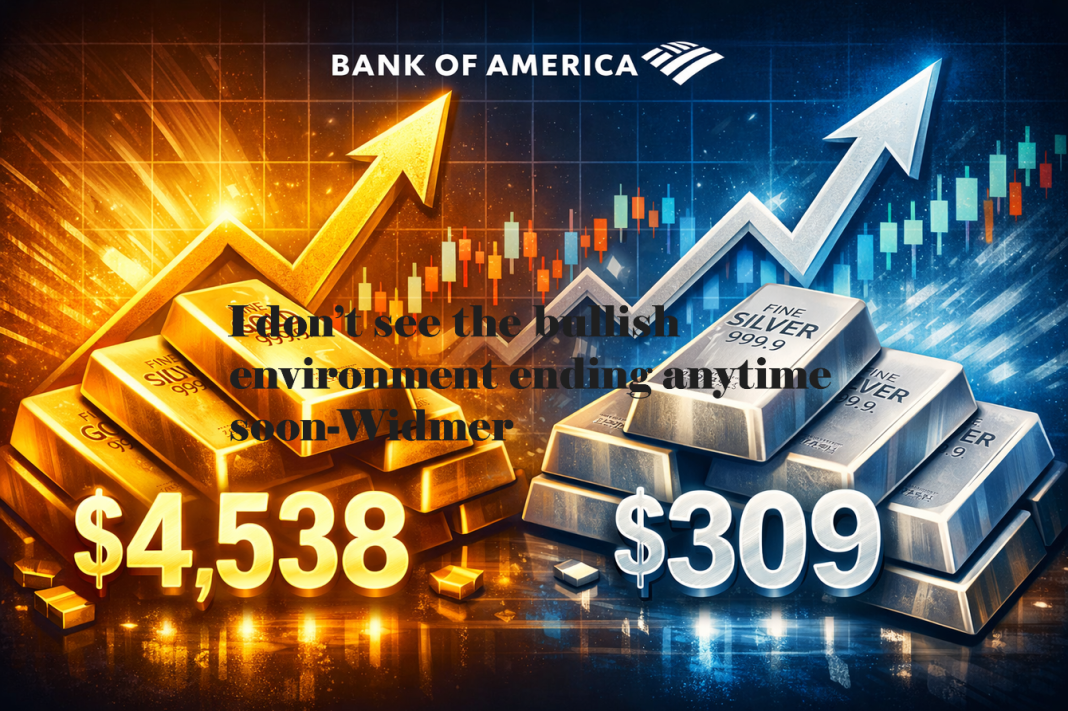
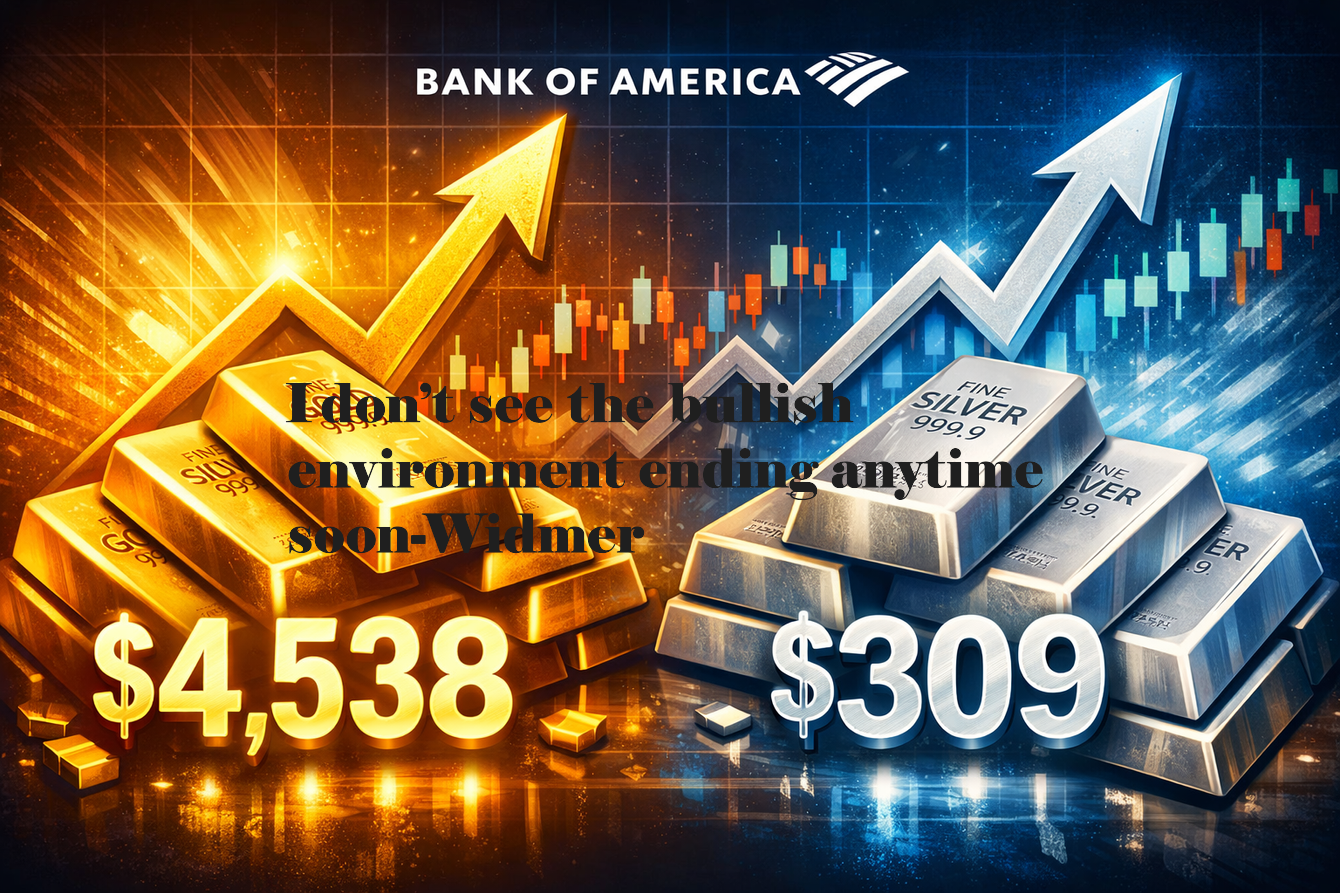
Bank of America’s metals strategist Michael Widmer has emerged as a key voice in the 2026 forecast, emphasizing gold’s resilience in a report titled “Gold will be the primary hedge and performance driver in 2026, silver could top out between $135 and $309.” Widmer projects gold to average $4,538 per ounce this year, with upside potential to $5,000 if investment demand rises by just 14%, or even $8,000 with a 55% surge. He argues that gold bull markets don’t end merely due to price increases but only when underlying drivers fade. “Gold continues to stand out as a hedge and alpha source,” Widmer notes, adding that the market remains “underinvested” despite being overbought. He highlights diversification benefits, suggesting retail portfolios could justify 20-30% allocation to gold, far above current levels.
Central banks are a major pillar of this optimism, with gold now comprising 15% of global reserves—surpassing U.S. Treasuries—and optimized allocations potentially reaching 30%. Monetary easing cycles, especially with inflation above 2%, have historically boosted gold by 13% on average. Supply-side pressures add fuel: Production from major North American miners is expected to dip 2% to 19.2 million ounces, with costs rising 3% to $1,600 per ounce.
For silver, Widmer sees even more explosive potential, appealing to risk-tolerant investors. Based on historical gold:silver ratios—a low of 32:1 in 2011 implying $135 per ounce, and 14:1 in 1980 suggesting $309—silver could significantly outperform gold. This view aligns with other experts, such as Ronald-Peter Stöferle of Incrementum AG, who deems triple-digit silver a “certainty” in 2026 due to tightening supplies and industrial demand.
Broader market outlooks echo this positivity but with some nuance. Sprott analysts point to macro forces like inflation and geopolitical instability driving continued gains. FX Empire suggests hard assets like gold and silver may outpace stocks, thanks to structural demand from central banks. Investopedia anticipates a moderated bull run for gold, potentially stabilizing around $4,400, while others forecast peaks up to $4,800 or $5,000. Silver consensus leans toward $70-80 by year-end, though upside risks could push it higher.
Key drivers for 2026 include:
Inflation and Policy: Persistent above-target inflation and Fed easing cycles favor gold.
Geopolitical Risks: Ongoing conflicts and trade wars enhance safe-haven appeal.
Supply Constraints: Declining mine output and rising costs tighten markets.
Demand Surge: Industrial uses for silver (e.g., renewables) and investment inflows for both.
Portfolio Shifts: Questioning traditional 60/40 allocations in favor of higher gold exposure.
However, risks loom: A stronger dollar, rapid economic recovery, or overextended rallies could trigger corrections. Widmer cautions that while the bullish environment persists, markets remain volatile.
Gold vs. Silver: Which to Choose?
Gold offers stability and liquidity, making it ideal for conservative investors seeking inflation protection. Silver, with its higher volatility (beta around 1.5-2 times gold), suits those chasing growth, especially given its industrial leverage. The current ratio suggests silver may narrow the gap, potentially rewarding opportunistic buyers.
Investment Considerations
For those eyeing entry, physical bullion, ETFs (like GLD for gold or SLV for silver), or mining stocks provide avenues. Experts like Widmer advocate for diversification: “Whichever portfolio you’re looking at… they can benefit from diversification into gold.” Always consult financial advisors, as precious metals should complement, not dominate, a balanced portfolio.
Conclusion
As 2026 unfolds, gold and silver are set to navigate a complex global landscape, with Bank of America’s Widmer forecasting gold as the go-to hedge and silver’s potential highs capturing imaginations. Whether driven by economic cycles or unforeseen events, these metals remain timeless guardians of wealth. Investors watching the horizon would do well to heed Widmer’s words: “I don’t see the bullish environment ending anytime soon.”