(CNN) It was just like watching television.
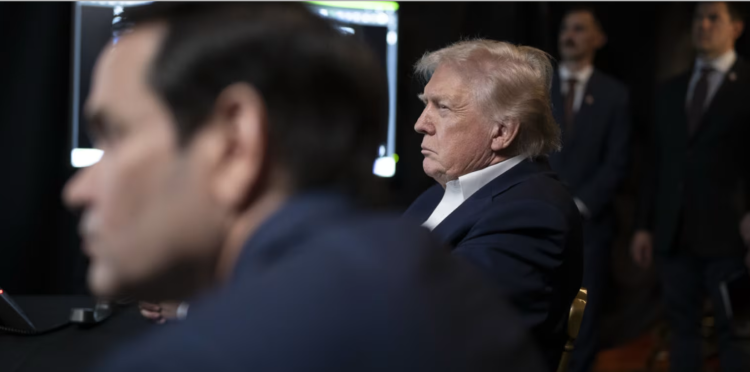
Huddled in a draped-off room at Mar-a-Lago around screens set up for his viewing pleasure — including, according to photos released by the White House, a live feed of social media messages on X — President Donald Trump watched and listened as highly trained American Delta Force soldiers rushed into Nicolás Maduro’s home in Caracas, where the Venezuelan leader was sleeping alongside his wife.
Maduro was quickly dragged into custody as he tried to flee to his steel-enforced safe room.
It was the dramatic culmination of a months-long campaign whose ultimate goal has long been clear to those involved in its planning: to oust Maduro from power. Trump, who at points along the way voiced misgivings about the potential for unintended consequences and the chances the US could be drawn into a prolonged war, put aside any reservations and gave a green light to the operation in the days before Christmas.
It wasn’t until more than a week later that the weather cleared and conditions were right for the heavily guarded mission. At 10:46 p.m. ET, after making a shopping excursion for marble and onyx and enjoying dinner on the Mar-a-Lago patio, the president gave the final go-ahead.
“Good luck,” Trump told the assemblage of national security officials who had convened at his gilded private club in South Florida, “and Godspeed.”
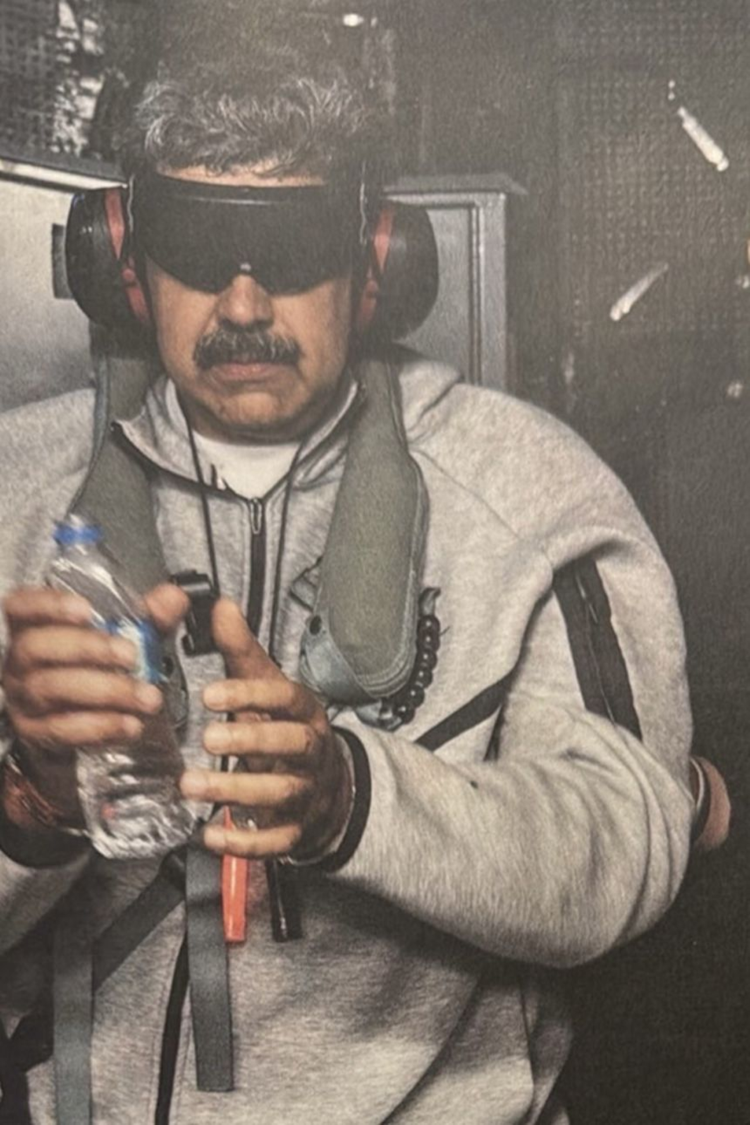
American helicopters were soon gliding across the sea, 100 feet above the dark water, toward Caracas. A couple of hours later, Maduro was in US custody, handcuffed, dressed in gray sweatpants and wearing blackout goggles, according to a picture Trump posted on Truth Social on Saturday morning.
Trump emerged Saturday to declare the United States would now “run” the country for an indeterminate future, offering little detail and claiming he was not afraid of “boots on the ground.”
For a president whose political movement was fueled, in part, by resentments over two decades of bloody American foreign intervention, it was a remarkable turnabout. The president mostly glossed over the work that may lie ahead, focusing instead on obtaining access to Venezuela’s vast oil reserves and repeatedly declining to rule out a more robust US military presence if Maduro’s allies refuse to cede power.
In the hours after the strike, sources around Washington, including congressional staffers and allies of the president, privately voiced concerns about the long-term consequences of the action — both in terms of US national security and the potential political fallout for a president with low-approval ratings whose base has shown little appetite for American intervention abroad.
At Trump’s side this week in Florida have been the chief architects of the escalating pressure campaign on Maduro, Secretary of State Marco Rubio and senior adviser Stephen Miller, who were seen at dinner with the president hours before the operation began. They joined him again as he proclaimed victory on Saturday.
Preparations for the raid began in mid-December, people familiar with the plans told CNN. But the vision had been planted months earlier. Even before the first US military strike on an alleged drug-carrying boat from Venezuela in early September, the plan to remove Maduro from power was already in motion.
While the US was visibly building up its military assets in the Caribbean, moving warships and other materiel to the region, another buildup was happening in secret. In August, the CIA covertly installed a small team inside Venezuela to track Maduro’s patterns, locations and movements, which helped bolster Saturday’s operation as to his exact whereabouts, including where he would be sleeping, sources familiar with the plans told CNN.
The team found out “how he moved, where he lived, where he traveled, what he ate, what he wore, what were his pets,” Gen. Dan Caine, the chairman of the Joint Chiefs of Staff, said Saturday.
The assets included a CIA source operating within the Venezuelan government who assisted the United States with tracking Maduro’s location and movements ahead of his capture, one source briefed on the operation told CNN.
The detailed timeline and the revelation that a CIA team has been operating inside Venezuela for so long sheds new light on the administration’s pressure campaign on Maduro for the past several months, even as senior officials publicly stated their goal was not regime change.
Several Democratic members of Congress on Saturday accused Rubio and Hegseth of lying to lawmakers during a Senate briefing last month.
Sen. Andy Kim of New Jersey wrote in a post on X that “Secretaries Rubio and Hegseth looked every Senator in the eye a few weeks ago and said this wasn’t about regime change. I didn’t trust them then and we see now that they blatantly lied to Congress.”
In October, Trump said he authorized the CIA to operate inside Venezuela to clamp down on illegal flows of migrants and drugs from the South American nation. The CIA declined to comment.
Late last month, the CIA carried out a drone strike on a port facility on the coast of Venezuela, marking the first known US attack inside that country. The strike targeted a remote dock on the Venezuelan coast that the US government believed was being used by the Venezuelan gang Tren de Aragua to store drugs and move them onto boats for shipping, the sources said.
No one was present at the facility at the time it was struck, so there were no casualties, according to the sources.
Despite the plans being drafted to oust Maduro, many White House officials had continued to hold out hope in recent weeks that the Venezuelan president would voluntarily step down, two senior White House officials told CNN.
During a phone call between Trump and Maduro in November, the American president repeatedly stressed to the Venezuelan leader that “it would be in his best interest” to step down and leave the country, one official said, calling the conversation “pretty much an ultimatum.”
“I want to be clear about one thing: Nicolas Maduro had multiple opportunities to avoid this,” Rubio said Saturday. “He was provided multiple, very, very, very generous offers and chose instead to act like a wild man, chose instead to play around, and the result is what we saw tonight.”
As recently as the beginning of December, the administration believed it was beginning to see cracks in Maduro’s support system, one of the officials told CNN. As time went by, however, that belief began to dissipate, and planning for the operation began.
Once Trump gave the go-ahead in late December, the operation was disrupted by several factors, including the weather in Venezuela and the president’s decision to strike Nigeria on Christmas, one official said.
Caine said Saturday that “Operation Absolute Resolve” was the culmination of “months” of planning and rehearsals involving 150 aircraft and personnel across military and intelligence agencies.
The troops tapped to participate then had to wait for the ideal conditions, Caine said, and were on standby through the holidays as weather delayed the operation.
“Last night, the weather broke just enough, clearing a path that only the most skilled aviators in the world could maneuver through,” Caine said.
Once Trump gave the go-ahead just before 11 p.m. ET, US military aircraft began taking off from 20 bases in the Western Hemisphere, Caine said. Those aircraft would deliver precision strikes on Venezuelan ground targets, such as air defense systems, and provide cover for the helicopters carrying the extraction team to Caracas. The US also deployed cyberwarfare tactics to help clear a path for its teams operating in the sky and on the ground, Caine said.
The helicopters with the extraction team reached Maduro’s compound at 2 a.m. local time in Caracas, the general said. Upon arrival, the helicopters came under fire and one was hit but remained flyable. The US returned fire in defense, Caine added.
“As the operation unfolded at the compound, our air and ground intelligence teams provided real-time updates to the ground force, ensuring those forces could safely navigate the complex environment without unnecessary risk,” he said.
Caine said Maduro and his wife “gave up” to the US military personnel before being flown out of the country. Maduro and Flores were placed aboard the USS Iwo Jima before being taken to the US military base in Guantanamo Bay, two sources familiar with the plans told CNN.
The base, sometimes referred to as “Gitmo,” is in southeastern Cuba and is home to the notorious detention camp. There, Maduro and his wife were transferred to a plane, which landed at Stewart Air National Guard Base in New York on Saturday evening.
https://www.cnn.com/2026/01/03/politics/nicolas-maduro-capture-venezuela