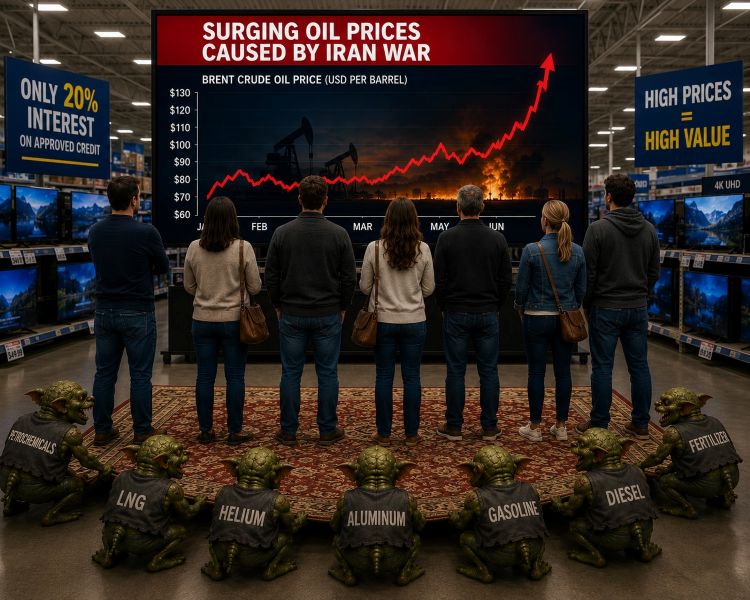
Since the war in Iran started in late February, everyone has been anxiously following crude oil prices because energy prices affect every household and business every day.
The impact of the war has been significant, as illustrated in the crude oil price chart below. Suddenly, evening news reports provide a daily update on consumer gasoline prices.
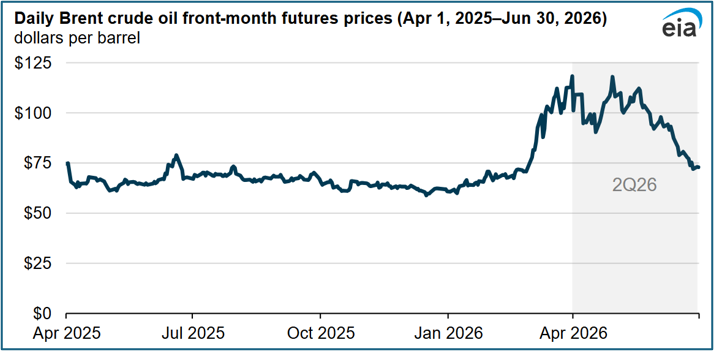
Figure 1 – Source: Petroleum markets responded to disruptions in the Middle East in the second quarter, EIA
The impact of the war on other commodities has been equally significant but has received less attention. The war has significantly reduced shipping through the Strait of Hormuz and reduced production of numerous commodities as Iranian missiles and drones have damaged facilities in various countries throughout the Middle East. This article is intended to fill that gap.
Petrochemicals
The Middle East is also a critical source for the many petrochemicals upon which industrial economies are built.
About $20-25 billion worth of petrochemical products pass through the Strait of Hormuz annually. Since the war began, plastic prices have surged to roughly four-year highs. The war in Iran has reduced ethylene production and shipping by about 12% of global production. Ethylene is the primary feedstock for the most widely used plastic in the world, polyethylene, which is found in packaging, piping, automotive components, and medical devices.
The chart below shows that the price of ethylene in Europe has risen by 25%. This increase is representative of price increases for other petrochemicals.
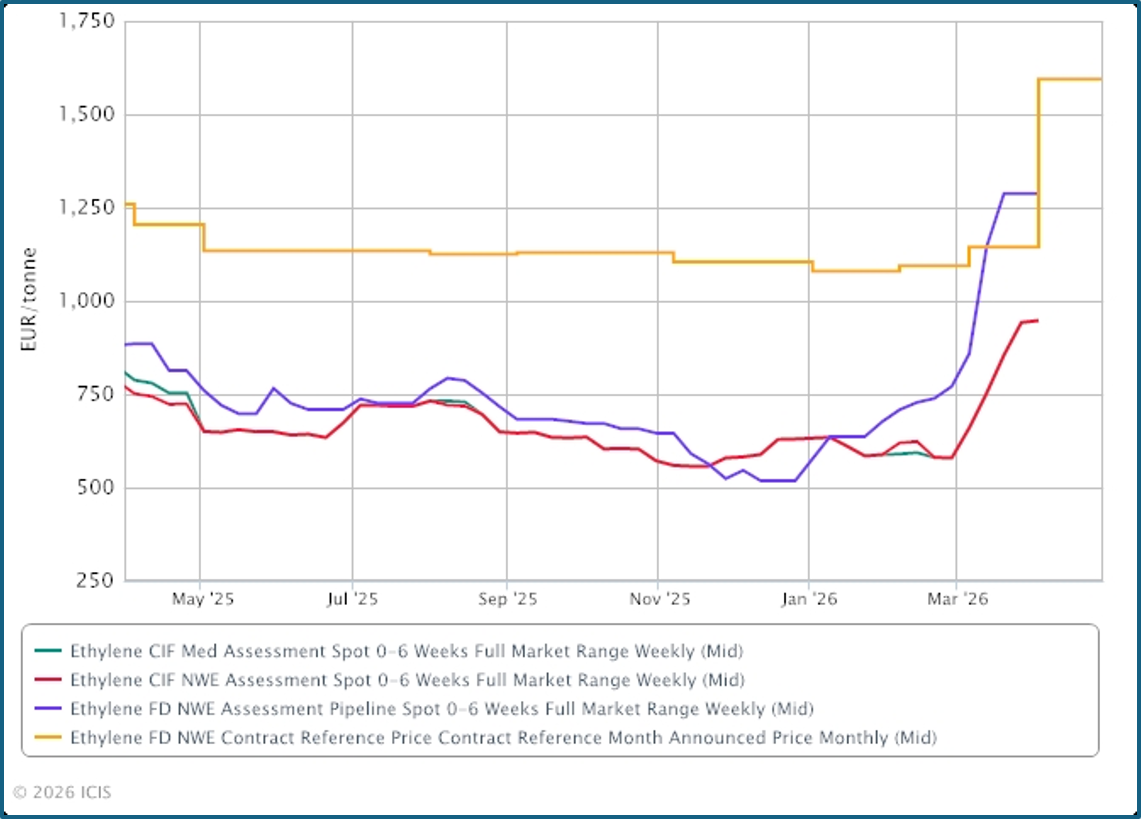
Figure 2 – Source: Europe ethylene CP rises a record €450/tonne for April on Middle East conflict, ICIS.
Plastic manufacturers in Asia and Europe, which are heavily reliant on the Middle East, are being squeezed. However, North America is relatively unaffected due to the availability of local feedstocks.
The market size of my home country of Canada’s petrochemical industry is $7 billion. Dow’s landmark Path2Zero project, upon completion, will be the world’s first net-zero-emissions integrated ethylene facility. It will add to the province of Alberta’s leading position in petrochemicals.
Liquefied natural gas
Natural gas for LNG is another crucial commodity that has faced large disruptions. Europe entered 2026 with natural gas storage levels significantly below those of recent years, leaving it poorly positioned when LNG tanker traffic in the Strait of Hormuz collapsed. About 20% of global LNG trade transits the strait, with Qatar as the dominant supplier. Iranian strikes on Qatar’s Ras Laffan LNG complex – the world’s largest – have cut Qatar’s LNG production capacity by approximately 17%. The estimated repair timeline is three to five years.
Surprisingly, global LNG supply grew by 2% year-over-year in June 2026, despite the continued disruption of flows via the Strait of Hormuz. This highlights the resilience of the global LNG market and the effect of the unfolding LNG wave of increased supply.
As illustrated on the supply chart below, the dramatic Middle East LNG shortfall is being filled by Australia, Canada, Russia, and the United States. Some European leaders are annoyed that the war is hampering their ability to curtail LNG purchases from Russia.
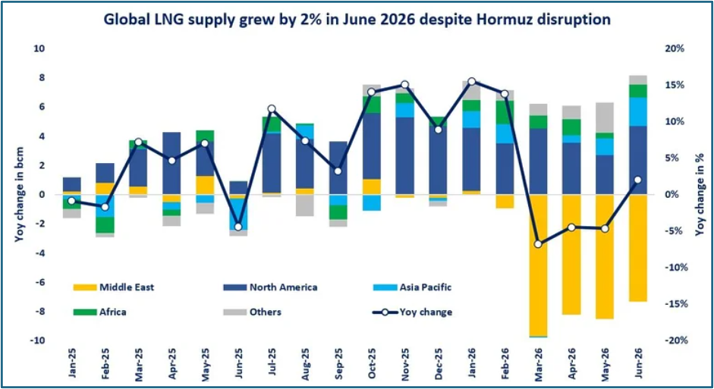
Figure 3 – Source: Global LNG supply grew by 2% in June 2026 despite Hormuz disruption, Global LNG Hub.
Canada is well positioned to take LNG market share from the Middle East in Asia. LNG Canada on its western coast in Kitimat is exporting to Japan, South Korea, and the Philippines. Woodfibre LNG and Cedar LNG are under construction. Potential projects include LNG Canada Phase 2 and Ksi Lisims.
Aluminum
Research/consulting firm Wood Mackenzie projected that the global aluminum market was already heading for a 200,000-tonne supply deficit in 2026 before the war. This deficit was projected to widen to 800,000 tonnes by 2028. The war only exacerbated this supply shortfall.
Iranian missiles struck the Global Aluminium Al Taweelah site in the United Arab Emirates and Aluminium Bahrain, two of the Gulf’s largest smelters, which together account for 6% of global production. Consequently, benchmark London Metal Exchange (LME) aluminum futures briefly touched their highest levels since 2022, as shown on the price chart below.
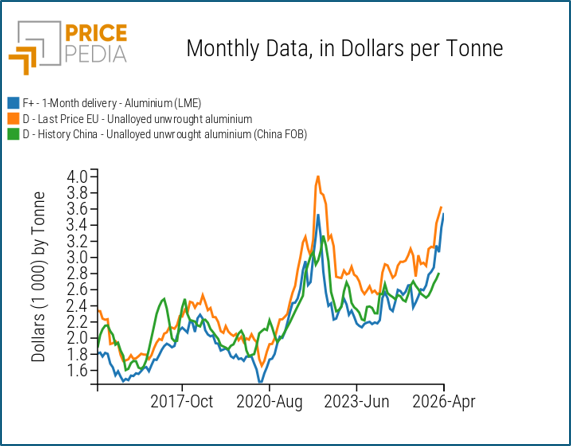
Figure 4 – Source: Aluminum price forecasts in light of the conflict in Iran, Pricepedia.
The blockade of the Strait of Hormuz affects aluminum production in two ways: smelters rely on ships for alumina imports and for finished aluminum exports.
The aluminum disruption has a Canadian angle. After the U.S. imposed a 50% import tariff on Canadian aluminum, 4% of global production found its way to European markets. While U.S. aluminum imports from Canada dropped 27% in 2025, exports are starting to bounce back in 2026. Concurrently, U.S. reliance on Middle Eastern aluminum has increased. As the war reduced Middle Eastern exports, U.S. manufacturers became more exposed to global aluminum price increases and shortages.
Gasoline and diesel
Gasoline and diesel prices have increased due to lower export volumes of crude oil and refined products from the Middle East. In addition, the impact of Ukrainian attacks on Russian refining capacity led Russia to curtail exports. The impact of these events in the U.S. is illustrated in the price chart below.
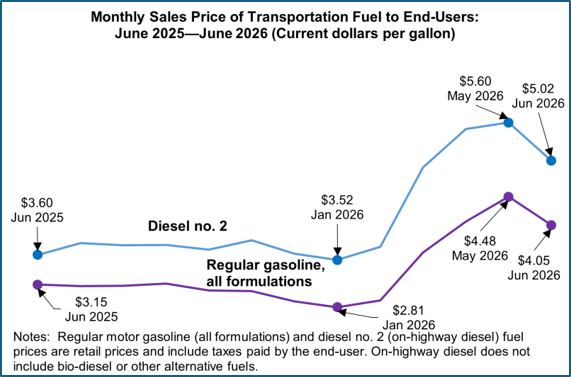
Figure 5 – Source: Motor Fuel Prices – June 2026, BTS.
Canadian gasoline and diesel prices have fluctuated in response to changes in global crude oil prices.
Helium
The helium supply is often overlooked despite its critical role in semiconductor chip manufacturing for artificial intelligence data centres. The war in Iran has created a shortage of helium because Qatar’s Ras Laffan complex, damaged by Iranian drone strikes, removed roughly 30% of the global helium supply within days.
The Northeast Asia spot market, the global benchmark, reflects the impact as shown in the spot price chart below. Helium spot prices approximately doubled during the initial supply shock. Prices eased quickly as inventories were released, U.S. production increased, and buyers adjusted procurement strategies.
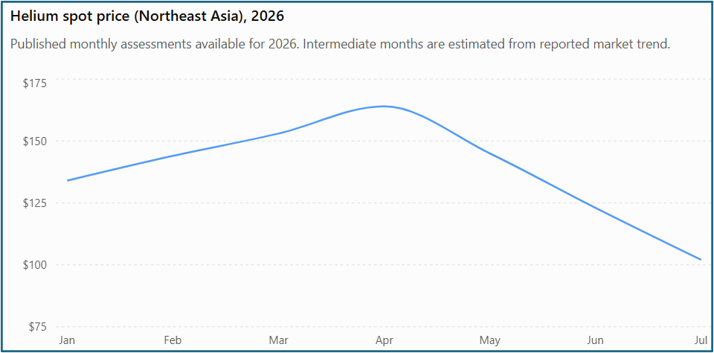
Figure 6 – Source: ChatGPT chart. Unlike crude oil and natural gas, helium does not have a transparent, exchange-traded spot market. Prices are negotiated privately. However, market intelligence firms publish regional spot price assessments.
Helium is co-produced with natural gas in some parts of the world.
Canada relies heavily on importing refined helium from the U.S. Some estimates indicate Canada has helium resources that would make it the fifth largest in the world.
Fertilizer
The majority of Middle East fertilizer supply remains blocked from international trade due to the war in Iran. The major exporters are Saudi Arabia, Oman, and Qatar. The blockage has resulted in significant price increases in key import markets, as illustrated by the urea price chart below. This surge is similar to price increases for other fertilizers.
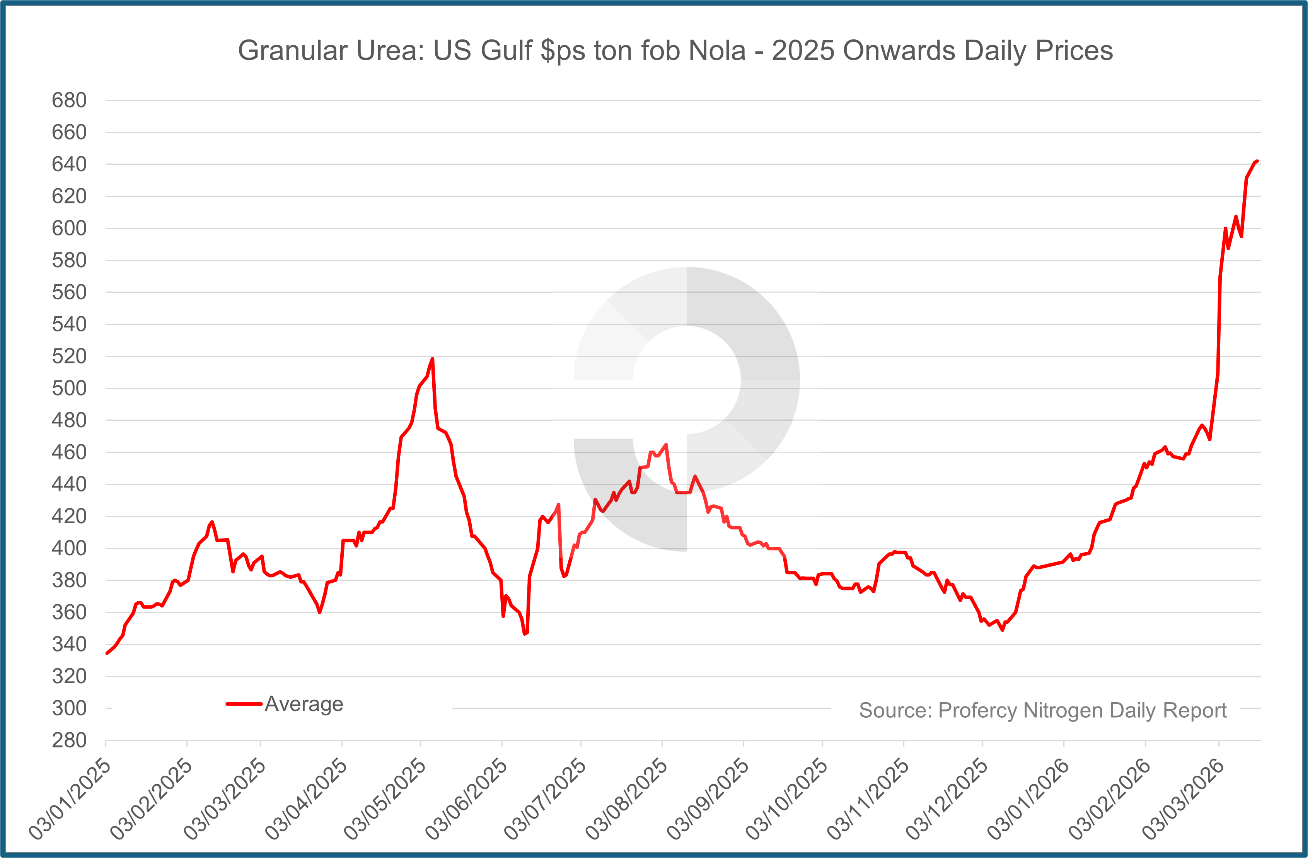
Figure 7 – Source: Urea – Midweek Update: Middle East crisis sees global urea prices established above $ 700/ton FOB, Profercy.
Canada is a net exporter of potash and nitrogen fertilizers. However, it relies heavily on imports of phosphorus fertilizer. Canada imports an average of 4.1 million tonnes of phosphorus annually, primarily from the U.S., Morocco, and Algeria.
Conclusion
Because businesses and households consume these commodities either directly or through products further along the supply chain, the rising prices are increasing inflation and overall affordability concerns in many countries.
Supply and therefore prices are unlikely to return to pre-war levels until:
- Shipping through the Strait of Hormuz returns to normal levels
- Ukrainian attacks on Russia’s energy infrastructure stop
- Repairs to the commodity production facilities are completed
If commodity prices remain elevated for a sustained period, the economies of many countries will see substantial slowdowns.
(Yogi Schulz – BIG Media Ltd., 2026)